Hijama (cupping) or halotherapy: which suits you and your child?
Last updated: 30 October 2026
More and more people are looking for a natural treatment for their complaints, and they come across two age-old methods: Al-Hijama, traditional cupping, and halotherapy in the salt room. Both have a long history and both are seen as a way to help the body heal itself. Yet in practice they are very different. With hijama, cups are placed on the skin and small incisions are often made. With halotherapy you sit relaxed in a chair and breathe in dry, medicinal salt.
In this article we put hijama and halotherapy side by side: how they work, what people use them for, how a treatment feels and who they are suitable for. We pay special attention to children and babies, because for them the difference is greatest. In our children's salt room, children get better while they play, with no needle, no incision and no pain.
Key insight
Hijama is an invasive treatment on the skin, aimed at blood and muscles. Halotherapy is completely non-invasive and works directly on the airways and the skin through dry salt in the air. That is why the salt room is also suitable for babies from six months and young children.
What is Al-Hijama (cupping)?
Al-Hijama is Arabic for "sucking" and is one of the oldest forms of cupping therapy. The method appears in Arabic, Chinese and Greek medicine and has been used for centuries in the Islamic tradition. Many people know hijama as a sunnah treatment.
There are two forms:
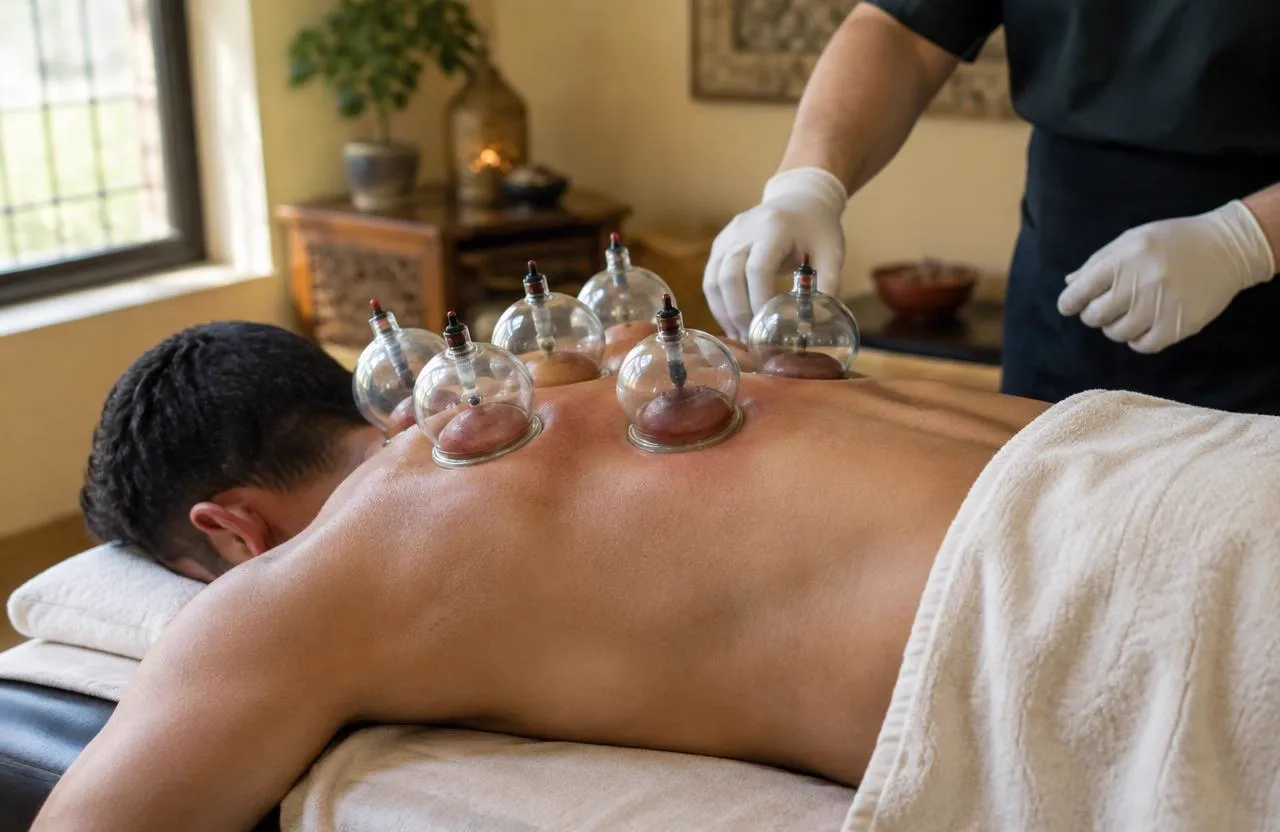
- Dry cupping: glass or plastic cups are placed on the skin with suction. The skin and underlying tissue are drawn upwards. This leaves the familiar round, red or purple marks.
- Wet cupping (classic hijama): after the suction, the practitioner makes small incisions in the skin and places the cups again, so that a little blood is drawn out.
People choose hijama for back and neck complaints, tense muscles, headaches or a general feeling of "cleansing". A treatment usually takes 30 to 60 minutes. Afterwards the marks on the skin often remain visible for days, and with wet cupping the small wounds need to heal.
What is halotherapy in the salt room?
Halotherapy is dry salt inhalation. The idea comes from the salt mines of Eastern Europe, where doctors noticed as early as the nineteenth century that miners had remarkably few respiratory complaints. In a modern salt room we recreate that mine climate: a halogenerator grinds medicinal salt into microscopically fine particles and blows them evenly into the room.
You simply breathe in those particles while sitting relaxed. They reach the nose, the sinuses, the throat and deep into the lungs. There the dry salt thins stuck mucus, shrinks swollen mucous membranes and the salt makes inflammation disappear. With skin conditions such as eczema and psoriasis, only about 20% of the effect comes from the salt that lands on the skin. The other 80% of the skin's recovery comes from within: through your breathing, the immune system gets the chance to reset itself.
HaloClinic Nederland has been working professionally with halotherapy since 2011. Clients come to us for asthma, COPD and bronchitis, sinusitis, hay fever, persistent coughing and skin complaints. Many also use the salt room to unwind.
Hijama and halotherapy side by side
When you compare the two treatments, the differences lie mainly in approach, experience and who they are for:
| Al-Hijama (cupping) | Halotherapy | |
|---|---|---|
| How it works | Suction on the skin, with wet cupping drawing out blood | Breathing in dry, medicinal salt |
| Invasive | Yes, with wet cupping incisions in the skin | No, completely non-invasive |
| Aimed at | Muscles, circulation, back and neck | Airways, sinuses and skin |
| Experience | Pulling sensation, sometimes painful | Relaxing, painless, you can sleep or read |
| Afterwards | Visible marks, small wounds need to heal | Straight back to work, sport or school |
| Children and babies | Not usual for young children | Welcome from six months, together with a parent |
The biggest difference is where the treatment works. Hijama works from the outside on the skin and the muscles. Respiratory complaints, however, sit deep inside: in the sinuses, the bronchi and the alveoli. That is exactly where the dry salt ends up naturally as you breathe. For anyone suffering from a blocked nose, mucus, coughing or shortness of breath, halotherapy is therefore the most direct natural approach.
A second difference is the strain on the body. With hijama the skin is damaged and the body then has to recover. In the salt room the body has nothing to process except fresh, salty air. You can therefore follow the treatment more often and for longer in a row, which is exactly what chronic complaints need. How often you should come is explained in our halotherapy treatment guide.
You are welcome with your child from six months of age. Our treatment is completely natural. Come by in Zaandam or Heemstede.
Children and babies: getting better while they play
For parents this may be the most important point. A child with a tight chest, a nose that keeps getting blocked or a cough that just won't go away is a child you want to help without causing pain. Cups and incisions are not an option for a baby or toddler. A salt room is.
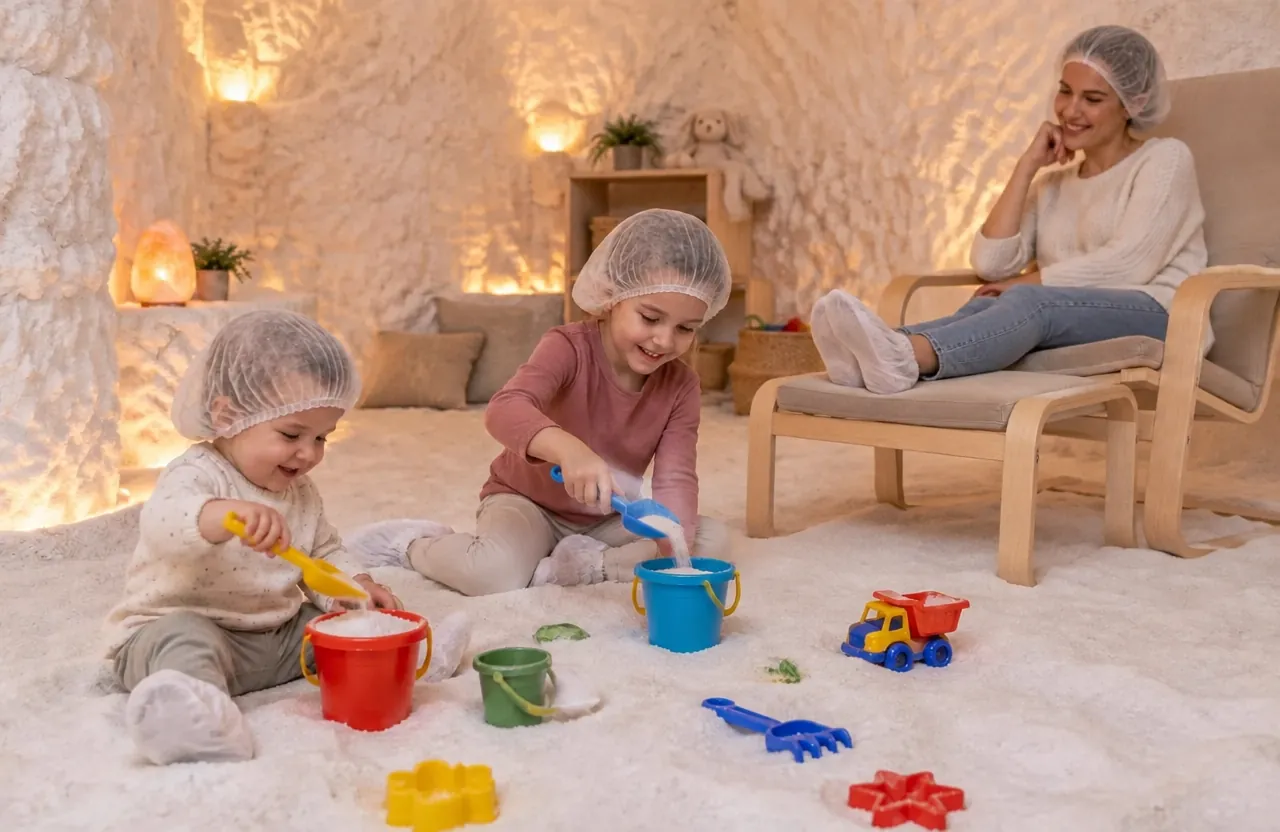
In our children's salt room in Zaandam the floor is covered with salt, like a big sandpit. There are buckets, spades, moulds and toy cars. Children start playing by themselves: scooping salt, building little mountains, tipping with the toy truck. Meanwhile they breathe in the fine salt particles throughout the session. They don't notice they are being treated. There is no mask, no nebuliser and no fuss. They play, and get better in the meantime.
A parent is always present during the session and sits in a comfortable chair next to the play area. That way your child feels safe and you can enjoy the salt yourself too. In Heemstede there is a cosy children's corner, so parent and child can come together there as well. Everything about halotherapy for little ones can be found on our page halotherapy for children.
Parents tell us that after a number of sessions their child coughs less at night, sleeps through better and catches colds less often. Children come to us with, among other things, asthma, recurring respiratory infections, a chronically blocked nose, bronchitis and eczema.
Why children recover faster
A striking pattern in our salt rooms: children often respond to halotherapy faster than adults. There are clear reasons for this.
- A young, flexible immune system. A child's immune system is still developing and responds quickly. Where an adult's body has often been living with inflammation for years, a child's body usually recovers more readily once the airways get the chance.
- Complaints haven't existed for long. In adults, respiratory complaints have often been present for years, with thickened mucous membranes and stuck mucus. In children the mucous membranes have usually not changed as much, so they settle down faster.
- Smaller airways, bigger effect. Children breathe faster and have smaller airways. A little mucus already causes a lot of tightness, so loosening that mucus also brings noticeable relief quickly.
- Relaxation helps. A child who plays breathes calmly and deeply. There is no stress and no tension, so the salt can do its work optimally.
That is why parents often see a difference after the first series of sessions: less runny nose, less coughing and a child with the energy to play and go to school or daycare again.
What a session in our salt room looks like
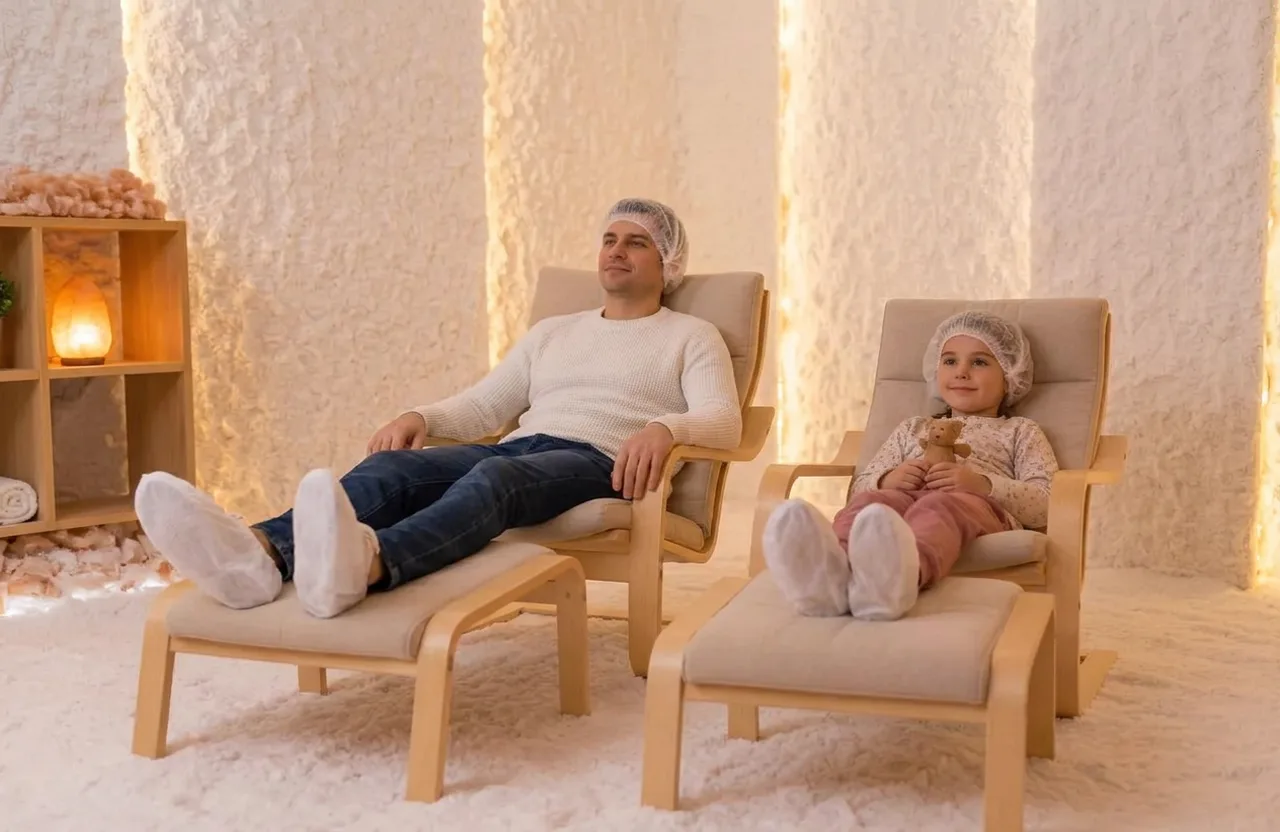
- Welcome: you are greeted and given white shoe covers and a hairnet, so the salt room stays clean.
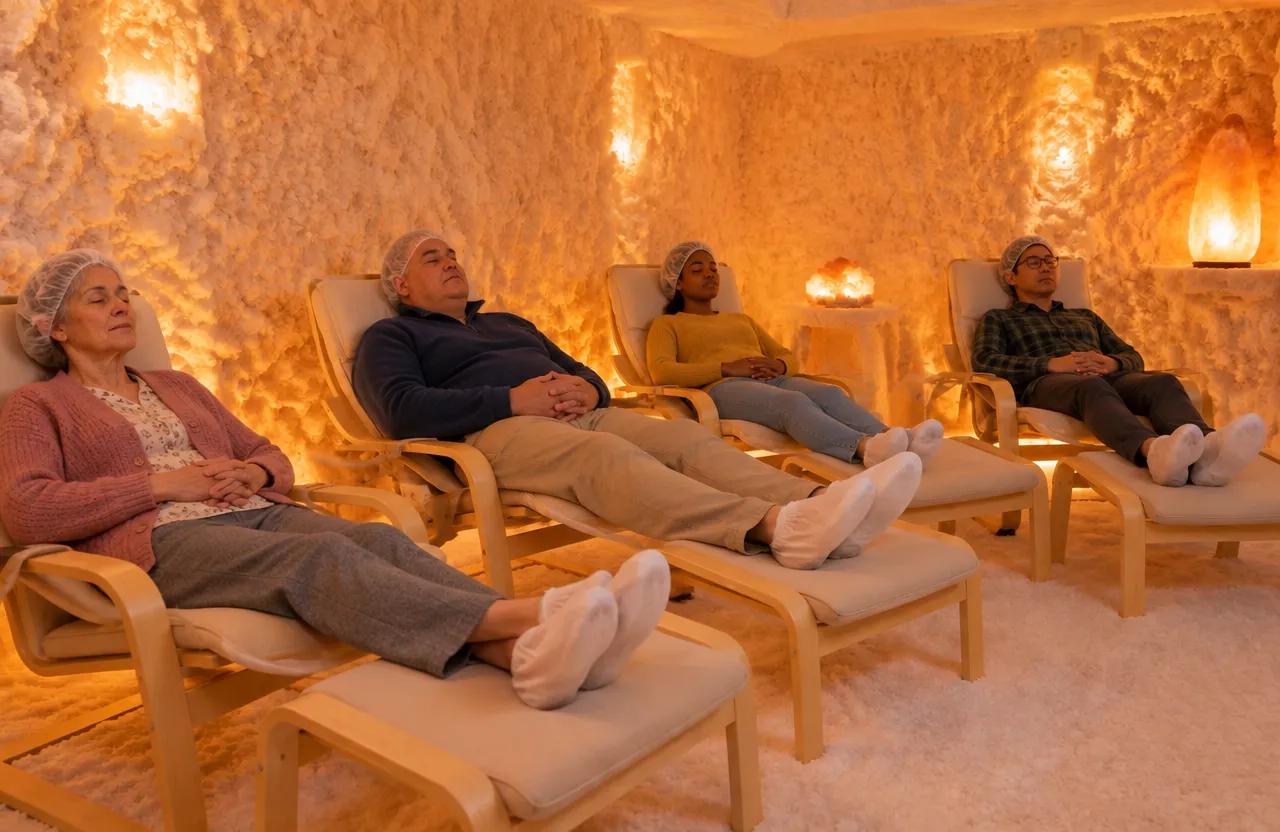
- Taking a seat: adults sit in a comfortable wooden armchair with a footrest, legs stretched out. Children go and play in the salt, with a parent nearby.
- Relaxing: the halogenerator disperses the dry salt. Calm music and soft light help you relax. You can sleep, meditate or simply breathe.
- Afterwards: you can carry on with your day straight away. No marks, no wounds, no recovery time.
A session lasts 60 minutes. The first session is free and without obligation, so you can experience for yourself how it feels. Would you like to read what others experienced first? Take a look at the experiences of our clients.
From all over North and South Holland to HaloClinic
HaloClinic Nederland has two locations: in Zaandam and in Heemstede. Clients come to us from all over North Holland and South Holland, often with the whole family.
People come to Zaandam from the entire Zaan region, from Amsterdam (North, West, New-West, Centre and beyond), from Purmerend, Alkmaar, Hoorn and the rest of West Friesland. Clients come to Heemstede from Haarlem, Kennemerland and the Bulb Region, but also from Leiden, Oegstgeest, Katwijk, Voorhout and Alphen aan den Rijn.
Both salt rooms are easy to reach by car and public transport, and there is parking nearby. For many families the trip has become a regular outing: a little time away together, and the child comes out cheerful and tired from playing.
Which treatment suits you?
Hijama and halotherapy both stem from age-old knowledge about how the body can help itself. If you are looking for a treatment for tense muscles or back complaints, some people choose cupping. If you or your child suffer from complaints of the airways, the sinuses or the skin, halotherapy is the logical choice: the dry salt reaches exactly where the complaints are.
What's more, the salt room is suitable for everyone, from baby to grandpa. No needle or blade is involved, the treatment is relaxing and you can carry on straight away. And for children there is no nicer way to get better than by playing.
Try it yourself
Book a free first session of 60 minutes in Zaandam or Heemstede and experience what it is like to breathe in dry, medicinal salt with every breath. Feel free to bring your child.
Frequently asked questions
What is the difference between hijama and halotherapy?
With hijama (cupping), cups with suction are placed on the skin, and with wet cupping small incisions are made. With halotherapy you sit relaxed in a salt room and breathe in dry, medicinal salt. Halotherapy is non-invasive and works directly on the airways, the sinuses and the skin.
Is halotherapy suitable for babies and children?
Yes. Children are welcome from six months of age, always together with a parent. In Zaandam they play in a children's salt room with toys while breathing in the dry salt. In Heemstede there is a children's corner.
Why do children often recover faster in the salt room?
Children's immune systems are young and respond quickly, and their complaints usually have not existed for very long. Children who play also breathe calmly and deeply, so the salt can do its work well.
Does halotherapy hurt?
No. You sit in a comfortable chair and simply breathe. There are no needles, cups or incisions, and afterwards you can carry on with your day straight away.
Where can I get halotherapy?
HaloClinic Nederland has salt rooms in Zaandam and Heemstede. Clients come from all over North Holland and South Holland, including Amsterdam, Haarlem, Alkmaar, Purmerend and Leiden. The first 60-minute session is free and without obligation.